— THE KENNEDY FIRM PRESENTS —
The Weekly AI Brief
Edition #3 · Monday, November 2, 2026
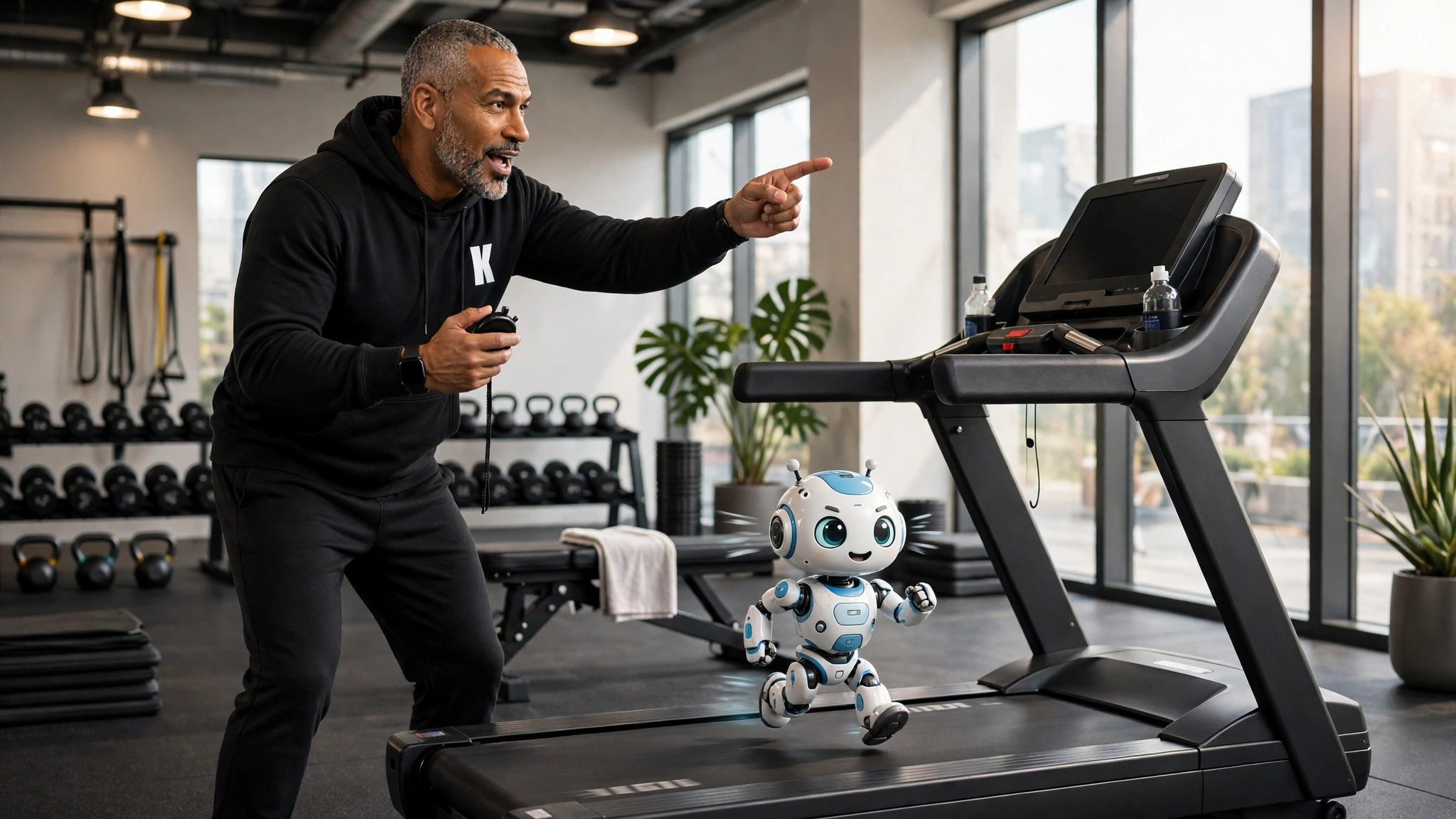
People keep asking which AI agent I bought, and what it costs me a month. Wrong question. I didn’t buy an agent. I trained one.
Training doesn’t look like a purchase. It looks like reps. It looks like me at midnight, studying a video frame and saying: that’s not me. The hair is wrong. The skin is wrong. Do it again. It looks like standards getting written down — how a face gets checked, how a cut gets made, how an email goes out — until the work starts coming back right.
For the last few weeks, that’s been the real project. I trained my agent on my face until it could keep me me, frame after frame. I trained it on my voice until it built a studio on my own computer that narrates in it. I trained it on my judgment until I could hand it my inbox, my comments, and this newsletter — and trust what comes back.
And it compounds. This morning, before eight o’clock, I art-directed the picture at the top of this edition: me in my black Kennedy sweatsuit, training my agent on a treadmill. Four versions in fifteen minutes. Wrong. Closer. Wrong again. Right. That loop — I direct, it builds, I correct, it remembers — is the whole secret, and there is no shortcut around it.
The proof is the clip linked below. My agent researched the AI stock sell-off, wrote the script, built the graphics, and narrated the verdict — a finished piece of work I didn’t touch until it was done. This morning I changed exactly one thing: the voice. I picked a different one from the library and had it re-narrated, because that’s what training buys you. Direction, on demand.
▶ Watch the verdict clip — built & narrated by the agent I trained
I spent twenty years making video games in New York, and I’m an attorney. Nobody handed me those skills. I was trained — rep by rep, correction by correction. An AI agent works the same way. The people who win with this technology won’t be the ones who buy the most tools. They’ll be the ones willing to train.
Communication becomes comprehension. Comprehension becomes productivity. Productivity becomes prosperity. Training is how you climb.
— Justin

A working showrunner said the quiet part out loud this week. Katharina “Cat” Viken — a former dancer turned executive producer in vertical drama, three years working in AI — argues that you can’t just wedge AI into the big legacy studios. Houses like NBC Universal run on decades-old systems, move like cumbersome beasts, and won’t expose their crown-jewel IP to outside AI models. So the technology stalls at the top.
That stall, she says, is the opening. The new studios are small and nimble, and they’re being born on Instagram and YouTube — not on studio lots. And because an AI-generated visual, by itself, is something nobody clearly owns, the value moves to the one asset that is ownable: the script. The copyrightable story is the property. Everything else is weather.
Now the attorney’s read — because this is where the argument meets the law. This summer, SAG-AFTRA members ratified a new TV/Theatrical agreement — June 4, 2026, with 91.42% voting yes — running July 1, 2026 through June 30, 2030. That deal did not loosen the AI rules. It tightened them: consent and a specific-use description before anyone’s digital replica gets made, minimum pay and residuals for independently created replicas, and before a producer casts a synthetic performer in a human role, the union must be notified and bargain — an AI performer is allowed only where it brings “significant additional value” over a live actor.
Viken’s kicker is that when the deal expires in 2030, AI floods in. Hold that as what it is — a prediction about a negotiation nobody has had yet. What is fact: June 30, 2030 is when today’s protections come back to the table. What it means for you doesn’t wait that long:
Slow giants, fast dwarfs. The incumbents’ problem isn’t talent or money — it’s legacy systems plus fear of feeding their IP to somebody else’s model. If you run a small business against a big, slow rival, you know this pattern. The advantage right now belongs to whoever can adopt without asking a 30-year-old system for permission.
Own the IP, not the output. An AI image or clip alone is hard to own and easy to copy. The defensible assets are the script, the story, the characters, the brand — the copyrightable layer. Creating with AI without nailing down who owns what is building on rented land.
Provenance is becoming a contract word. Consent, disclosure, compensation for any AI use of a face or a voice — that’s the new baseline in entertainment deals, and that language is heading for every industry that hires creators, spokespeople, or influencers. Expect to sign AI clauses. Expect to ask for them.
The window is the next four years. While the big studios negotiate with their own systems, small studios and independent creators are building the formats — vertical drama, micro-series — and the audiences. Windows like this don’t stay open.
The full picture, as always in this Brief: Viken is selling something — her company, Raynmaker, protects scripts, and its free software, SCREENBURN, is part of the pitch. Her report of factories in China copying thousands of AI series a month is unverified. And her 2030 flood runs against the direction of the deal actually signed, which moved toward stricter AI rules. She’s a sharp voice on a small account, not industry consensus. But the argument underneath the pitch is the one worth your Monday: the giants are stalled, the script is the asset, and the clock is running.
| NVDA | $204.64 | −3.0% wk | MSFT | $521.91 | −0.5% wk |
| GOOGL | $279.84 | −12.6% wk | META | $614.99 | −4.3% wk |
| AMD | $504.80 | −2.3% wk | AMZN | $240.35 | −3.1% wk |
For watching, not advice. Prices as of Friday close, October 30, 2026.

Two weeks ago this page showed you six AI stocks, all in the red, and asked the only question that mattered: what’s the plan to pay for all this building? This week, three of the giants reported earnings — and the first real answer arrived. So let’s grade it, calmly.

Microsoft passes clean. The steadiest of the three — the one whose spending stays closest to what its business actually throws off. No drama, and in this market, no drama is an A.

Alphabet grows — but burns cash to do it. The business is expanding; the bill is expanding faster. Free cash flow came in at −$9.1 billion — the second straight negative quarter. Growth is not the question at Alphabet. Who pays for it is.

Amazon posted the strongest proof — and the biggest bill. Operating income hit $28.1 billion, a 13.9% margin — the best in the company’s history — with AWS at $46.0 billion, up 39.3%. And still, its trailing free cash flow is −$42.4 billion. The machine earns like never before, and spends like it even more.
And Friday’s chip plunge? Read the cause before you read the chart. Intel warned that PC sales are sliding into the fourth quarter, and the warning dragged the whole chip sector down with it — AMD fell 10.9% in a single day. That wasn’t the market grading AI demand. That was guilt by association.
Here’s the verdict, and it’s the same one the numbers keep giving: the demand is real at all three clouds. The market is pricing the financing — not the business. Nobody on those earnings calls announced austerity. The plan is proof, delivered quarter by quarter. Watch whether the proof keeps arriving.
|
What the Bank Said vs. What TikTok Said
A viral clip this week claimed JPMorgan “sounded the alarm” on an AI bubble pop in the next few months. It did no such thing. What JPMorgan actually published on October 23: lenders are done financing AI on faith; the stress is concentrated in the weaker, debt-dependent borrowers — one unnamed infrastructure firm’s credit insurance is priced like a coin-flip on default — while the cash-rich leaders are fine. Its phrase for those warning gauges: “warning lights rather than countdown clocks.” No crash call. No timetable. Same lesson as the earnings, in miniature: check the source before you share the scare. |

|
The Last 48 Hours Are When the Fakes Fly
Tomorrow — Tuesday, November 3 — is Election Day. And the final hours of any election are now when the manufactured stuff hits hardest: AI-generated endorsements that were never given, robocalls in a cloned voice that isn’t who it claims to be, “breaking news” that was built an hour ago to move you, not inform you. Three defenses, and they’re the same ones this Brief preaches every week. One: if it arrives at the last minute and demands an instant reaction, treat it as suspect until it’s verified — urgency is the tell. Two: for anything about where, when, or how to vote, go to official sources — your city or county registrar — never a forwarded post. Three: vote your own research. This Brief stays nonpartisan, and your ballot is your business. Just don’t let an algorithm cast it. |
The most talked-about tech of the moment — refreshed every week. No affiliate links yet — just what’s worth your attention.
 Ray-Ban Meta Wayfarer (Gen 2) SMART GLASSES The AI glasses people are actually wearing. Camera, speakers, and Meta AI in a pair of Wayfarers — shoot, listen, and ask questions hands-free. The Gen 2 sharpens the camera and stretches the battery. $379. |  Plaud Note AI VOICE RECORDER The recorder that ate the meeting. Credit-card thin, it magnets to the back of your phone, records calls and rooms, and hands you back a transcript and a summary. Over a million sold. $159. | |
 DJI Osmo Pocket 3 POCKET GIMBAL CAMERA The creator camera that lives in a pocket. Gimbal-stabilized 4K the size of a candy bar — the one half the internet seems to shoot on. $439. | 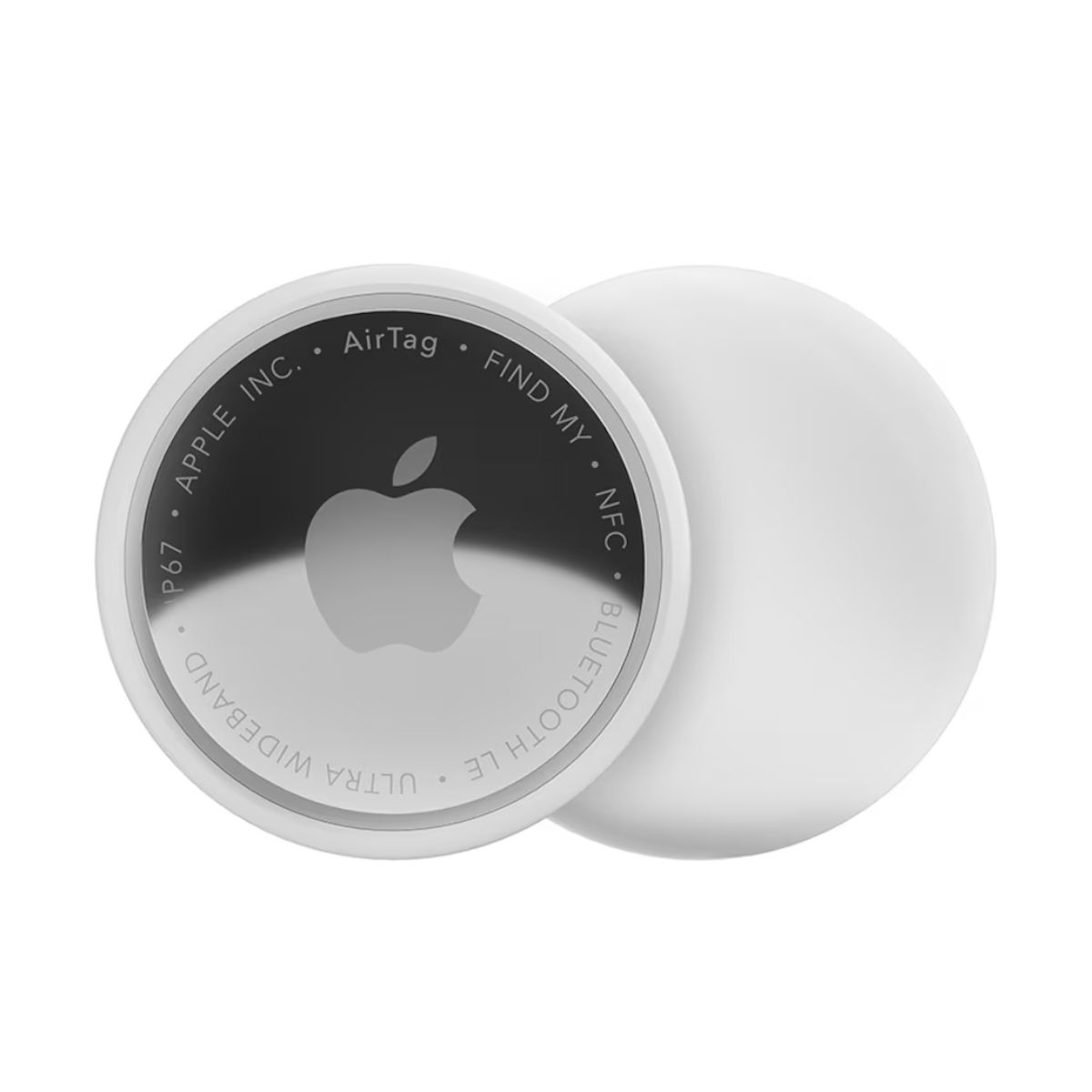 Apple AirTag (2nd Generation) KEY & BAG FINDER Apple’s finder, grown up. The second generation reaches farther and rings louder — the same coin-sized disc for keys, bags, and luggage. $29. | |
 Roborock Qrevo S Pro ROBOT VACUUM The vacuum that cleans up after itself. It vacuums, mops, then docks and washes its own pads — the closest thing to a floor that takes care of itself. $499.99. |  Hypershell X Max S WALKING EXOSKELETON Robot legs you actually wear. Motors at the hip and straps on the legs take the strain out of walking and hiking — your legs, with a power assist. $1,499. | |
New to this? Good. Everything below is genuinely free — the real tools, not trials in disguise. Pick one, spend twenty minutes, and you’ll understand more about AI than a month of reading about it. We check this list every week and rotate what’s new.
 | NotebookLM (now Gemini Notebook) — Google’s research helper. Feed it your documents, notes, or a video link and it answers from your material — and can turn it into an audio overview, two voices walking you through your own stuff. Free with a Google account. First try: upload a PDF and press “Audio Overview.” |
 | ChatGPT — the everyday starter — questions, drafts, rewrites, ideas, in plain conversation. Everyday chat is free and unlimited; the power extras have caps. First try: paste a messy email and ask for a clean rewrite. |
 | Google Gemini — chat plus image generation, free with a Google account, with a daily allowance of pictures. First try: describe a picture and watch it appear. |
 | Microsoft Image Creator — free image generation inside Microsoft Designer, with a Microsoft account. First try: make the picture for your next event flyer. |
 | Canva — design without a designer — over a million free templates for flyers, posts, and presentations. Stick to the free-marked items. First try: pick a template and change the words. |
 | CapCut — a free video editor for phone, desktop, and web — full editing, 1080p export, automatic captions. One honest catch: Pro-tagged extras can watermark your export, so stay with the free-marked tools. First try: auto-caption a video from your phone. |

Carmen and I have a saying in our house: humor is medicine. At this stage of our lives, we’re collecting healing wherever it honestly lives — the walk, the quiet, the real sleep, and yes, the laugh. This week the feeds were full of red numbers and heavy news, and the funniest moment in our house still did more for my spirit than any headline in it.
Scripture said it long before we did: “A merry heart doeth good like a medicine.” — Proverbs 17:22 (KJV). We just try to live it out loud.
So here’s your check-in: schedule the laugh the way you schedule the work. Call the friend who always leaves you crying laughing. Watch something foolish on purpose. Rest is part of the work — and so is joy.
|